
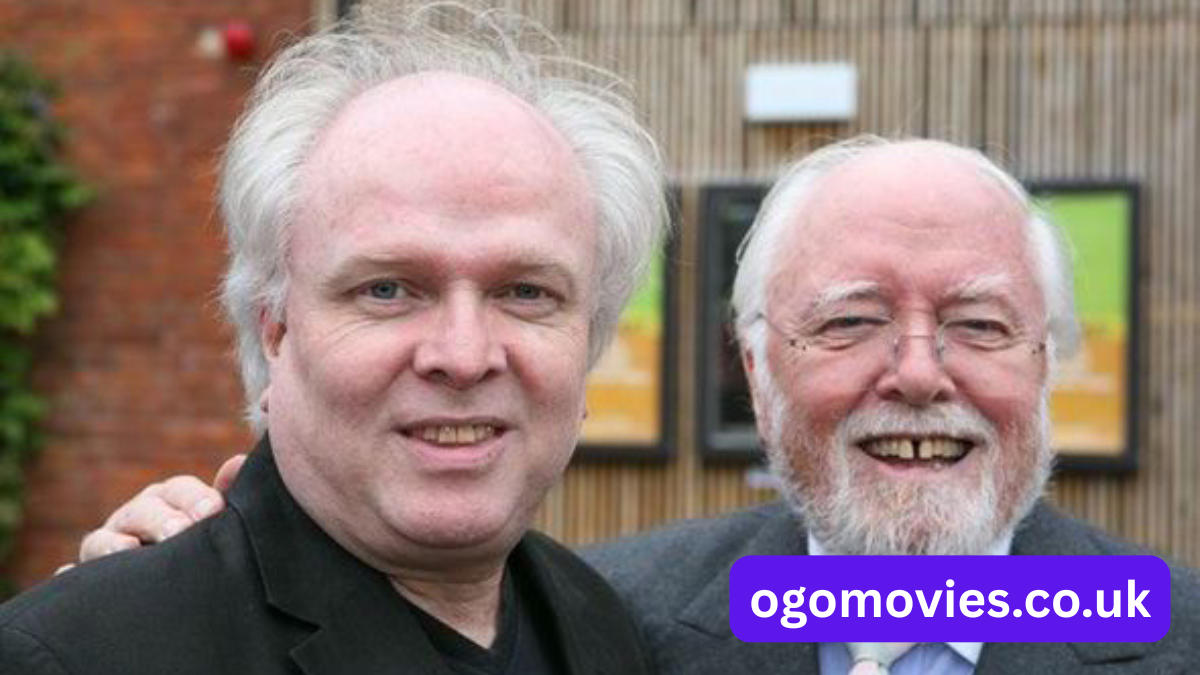
Introduction to the Name Robert Attenborough
The name Robert Attenborough often appears in online searches, academic references, and casual curiosity-driven queries, yet it remains surprisingly ambiguous in terms of a clearly documented public figure. This ambiguity makes it an interesting subject to explore, not necessarily as a biography of a widely established individual, but as a case study in how names circulate, evolve, and acquire meaning in digital culture. In many cases, names like this sit at the intersection of real-world identity, historical association, and online interpretation, which creates a layered narrative worth unpacking.
When people search for Robert Attenborough, they are usually trying to connect the name with something familiar. The surname Attenborough itself carries significant cultural weight due to its association with prominent British figures in broadcasting, science communication, and the arts. Because of this, any occurrence of the surname tends to attract attention and speculation. The addition of the first name Robert further complicates things, as it is a common English given name that does not immediately narrow the search to a single recognizable individual.
From an informational perspective, Robert Attenborough can be understood less as a clearly defined public personality and more as a keyword cluster that reflects curiosity, misidentification, or incomplete data. In digital spaces, this is not unusual. Many names gain traction not because of one central figure but because of overlapping references, partial mentions in documents, or mistaken associations with better-known individuals. This creates a sort of informational fog where interpretation becomes more important than strict biographical fact.
Another important angle to consider is how search behavior shapes perception. When users repeatedly search for a name that lacks a definitive identity, search engines begin aggregating fragments of related content, which can reinforce the idea that a notable figure exists even when documentation is sparse. In the case of Robert Attenborough, this effect is particularly noticeable because the surname strongly anchors the name within a recognizable cultural lineage.
Ultimately, the introduction to Robert Attenborough is not about confirming a single identity but about setting the stage for understanding how names function in modern information ecosystems. It is a reminder that not every frequently searched term corresponds to a well-documented person, and sometimes the significance lies in the curiosity itself rather than the subject of the search.
Origins and Etymology of the Surname Attenborough
To understand the context surrounding the name Robert Attenborough, it is essential to first examine the surname Attenborough itself. This surname has deep English roots and is traditionally classified as a locational surname, meaning it originated from a geographic place. In this case, Attenborough is derived from a village in Nottinghamshire, England. The name of the village historically appears in older forms such as “Atteborough” or similar variations, reflecting the linguistic evolution of Middle English over time.
Locational surnames were commonly assigned during the medieval period when populations grew and there was a need to distinguish between individuals with the same first name. A person might be identified by their place of origin or residence, and over generations, these identifiers became hereditary surnames. Attenborough is one such example, indicating that the earliest bearers of the name were likely associated with or originated from the village of Attenborough.
The structure of the name itself is also linguistically interesting. The suffix “-borough” comes from Old English “burg,” meaning a fortified place or settlement. The prefix elements likely refer to personal or descriptive markers tied to land ownership or geographic characteristics. Over centuries, pronunciation shifts and spelling standardization led to the modern form “Attenborough,” which is now widely recognized due to its association with prominent public figures.
When the surname is paired with a common first name like Robert, it creates a combination that is both familiar and yet not uniquely identifiable without additional context. This is one of the reasons why the name Robert Attenborough generates ambiguity in searches. It feels like it should refer to someone specific, but without supporting historical or biographical data, it remains open-ended.
In a broader sense, surnames like Attenborough also demonstrate how language preserves geography. Even if individuals move away from the original location or the place itself changes over time, the name continues to carry its historical origin. This creates a subtle but enduring link between identity and place, which is particularly relevant when analyzing names in genealogical or cultural research contexts.
Understanding the etymology of Attenborough therefore helps frame why the full name Robert Attenborough carries a sense of implied significance, even when the identity behind it is not clearly defined in public records.
Possible Historical and Familial Connections
When examining a name like Robert Attenborough, one of the first assumptions people often make is that it may be connected to a well-known family lineage. This is largely due to the prominence of the Attenborough surname in British cultural history. However, establishing direct connections requires careful distinction between documented individuals and speculative association.
The Attenborough surname is strongly associated with several notable figures in the arts and media, particularly within a British family known for contributions to film, acting, and natural history broadcasting. Because of this prominence, it is common for lesser-known or unrelated individuals sharing the surname to be assumed as part of the same family tree. In reality, surnames, even relatively uncommon ones, can exist across multiple unrelated family lines due to historical geographic distribution.
In the case of Robert Attenborough, there is no widely verified public record that clearly establishes him as a prominent historical or contemporary figure within the same documented family lineage that includes well-known Attenborough personalities. This does not necessarily mean the name is fictional or insignificant; rather, it highlights the importance of distinguishing between public prominence and private existence.
Genealogically, tracing a name like this would require access to birth records, census data, or archival documents that confirm lineage connections. Without such data, it is more accurate to treat the name as potentially belonging to multiple individuals rather than a single identifiable person. This is a common challenge in genealogical research, where overlapping names can create false assumptions of relationship.
It is also worth noting that in modern digital environments, names often circulate independently of their original bearers. A name might appear in fiction, academic citations, or even informal online discussions, further complicating efforts to tie it to a single historical identity. Robert Attenborough could therefore represent a real private individual, a fictional reference, or a misattributed variation of another name entirely.
From an analytical standpoint, the lack of clear historical anchoring makes the name more interesting as a study of ambiguity rather than certainty. It demonstrates how identity in the modern era is not always tied to publicly accessible records and how easily names can exist in a semi-documented state between reality and interpretation.
Public Mentions and Digital Footprint Analysis

In the digital age, the visibility of a name is often determined by its online footprint rather than traditional historical documentation. When analyzing Robert Attenborough from this perspective, what becomes immediately apparent is the fragmented nature of its presence across online platforms.
Unlike well-documented public figures who have consistent biographical entries, media coverage, and academic references, the name Robert Attenborough appears sporadically and without a unified narrative. This suggests that its digital footprint is either minimal, decentralized, or possibly composed of indirect references rather than dedicated content.
One of the most common characteristics of such names is their appearance in search engine results as part of larger contextual content. For example, the name may appear within genealogical discussions, forum threads, or databases that list multiple individuals without providing detailed biographies. This creates an impression of presence without depth, where the name is visible but not fully explained.
Another aspect of digital footprint analysis is the role of data aggregation. Search engines often compile information from various sources, and when a name appears in multiple unrelated contexts, it can begin to seem more significant than it actually is. This phenomenon is particularly relevant for names like Robert Attenborough, where the combination of a recognizable surname and a common first name increases the likelihood of scattered mentions.
It is also possible that some references to the name exist in offline or restricted-access records that are not indexed by public search engines. This includes local records, academic archives, or private databases. In such cases, the digital footprint remains incomplete, which further contributes to ambiguity.
From an information science perspective, the case of Robert Attenborough illustrates how digital identity is not always equivalent to real-world identity. A name can exist in search results without representing a clearly defined or publicly visible individual. This gap between data presence and informational clarity is a growing feature of modern digital ecosystems.
Common Misidentifications and Confusions
One of the most frequent issues surrounding names like Robert Attenborough is misidentification. This occurs when individuals or systems incorrectly associate a name with a more famous or better-documented person. In this case, the strong cultural presence of the Attenborough surname significantly increases the likelihood of confusion.
People often assume that any individual with this surname must be related to or associated with the well-known Attenborough family. While this assumption is understandable given the rarity and recognition of the name, it is not necessarily accurate. Misidentification can occur in articles, social media posts, or automated data systems that rely on incomplete information.
Another source of confusion arises from similar-sounding names or typographical errors. In some cases, Robert Attenborough may be a mistaken reference to another individual entirely, where a minor spelling variation leads to a completely different identity. This is a common issue in digital records, where human error or transcription inconsistencies can generate misleading associations.
Additionally, fictional or semi-fictional references can contribute to confusion. Names used in literature, scripts, or informal storytelling sometimes overlap with real names, creating ambiguity about whether a person is real or fictional. Without clear contextual grounding, these references can easily merge into search results and reinforce uncertainty.
The impact of such misidentifications is not trivial. In some cases, it can lead to incorrect assumptions about family relationships, professional backgrounds, or historical significance. This highlights the importance of careful verification when dealing with names that lack clear documentation.
In the broader context, Robert Attenborough serves as an example of how digital information systems can amplify confusion when multiple data points are not clearly connected. It underscores the need for critical thinking when interpreting search results, especially for names that appear to carry inherited significance.
Cultural Significance of the Attenborough Legacy
Even though Robert Attenborough as a specific identity may not be clearly defined in public records, the cultural weight of the Attenborough surname itself is undeniable. The name is strongly associated with contributions to natural history, broadcasting, and the arts, which has elevated it into a recognizable cultural symbol.
This cultural significance influences how any variation of the name is perceived. When people encounter the surname Attenborough, they often associate it with intellectual authority, storytelling, or scientific communication. As a result, even lesser-known or ambiguous references can inherit a sense of importance simply through association.
The broader legacy of the name has also contributed to its continued visibility in media and education. Documentaries, films, and academic references frequently reinforce the surname’s presence in public consciousness. This creates a form of cultural amplification where the name becomes more recognizable than many others, even when individual references are unrelated.
In this context, Robert Attenborough becomes part of a larger symbolic framework rather than a standalone identity. The name carries an implied connection to a tradition of knowledge-sharing and cultural contribution, even when specific details about the individual are not widely available.
It is also worth noting that cultural significance does not always depend on direct achievement. Sometimes, the meaning of a name is shaped by its association with a broader narrative or historical context. The Attenborough surname exemplifies this dynamic, where meaning is constructed through cumulative cultural impact rather than isolated biography.
This makes the study of names like Robert Attenborough particularly interesting, as it highlights how cultural perception can extend beyond documented fact and into the realm of symbolic identity.
Hypothetical Profiles and Modern Usage of the Name
Given the lack of a clearly established public figure associated with the name Robert Attenborough, it is useful to consider how such a name might function in hypothetical or modern contexts. In today’s digital and professional environments, names often appear in databases, fictional works, or placeholder content where full identity details are not always provided.
A hypothetical Robert Attenborough could, for example, represent an academic contributor, a private professional, or even a fictional character used in educational materials. In each of these scenarios, the name serves a functional role rather than a strictly biographical one. This is increasingly common in data systems where realistic-sounding names are used for examples or simulations.
Another possibility is that the name exists in localized or non-digitized contexts. Many individuals maintain a minimal digital footprint by choice, meaning their names may appear only in limited records without broader public visibility. In such cases, the absence of information is not an indication of non-existence but rather of privacy or limited data exposure.
From a linguistic perspective, the combination of Robert and Attenborough also makes the name feel structurally formal and historically grounded. This contributes to its plausibility as a real-world identity, even in the absence of detailed documentation. Names with this structure are often used in storytelling because they evoke familiarity and credibility.
In modern usage, names like Robert Attenborough also highlight the blurred boundary between real and constructed identities. In a world where data is constantly generated and replicated, it is increasingly difficult to distinguish between fully documented individuals and partially referenced names.
This does not diminish the value of the name itself but instead emphasizes the evolving nature of identity in the digital era. Whether real, partial, or hypothetical, Robert Attenborough functions as a reminder that names are not always straightforward representations of individuals but can also be part of larger informational ecosystems.
FAQs
What is Robert Attenborough known for?
There is no widely verified public figure with a clearly established profile under this name, and it is often seen in ambiguous or context-dependent references.
Is Robert Attenborough related to the famous Attenborough family?
There is no confirmed public information linking this name to the well-known Attenborough family lineage.
Why does the name Robert Attenborough appear in searches?
It often appears due to surname recognition, data aggregation, or fragmented online references that create curiosity around the name.
Is Robert Attenborough a real person?
It is possible the name belongs to private individuals, but there is no widely documented public identity associated with it.
Why is the Attenborough surname so recognizable?
The surname is associated with prominent figures in broadcasting, science communication, and the arts, which has made it culturally significant over time.
Also read: Druski Height: Everything You Need to Know About the Comedian’s Stature and Public Curiosity